Friday, 17 May 2013

Red wines from secondary grapes to be discussed on Food in Focus with Natascha Moy!

I once again have the privilege of being a guest on Natascha's great food and wine show, Food in Focus.  It will be on Saturday, 18 May at 4 pm Sydney time.  If you are dialing (does anyone truly have a dial on their radio anymore?) in, it is 89.7 FM in Sydney, Australia or can be found and heard over the Internet as Food in Focus.


Natascha is always great fun and mixes it up well.  The first time I was on the show, we talked about party wines.  The next time, we sampled and discussed Rieslings.  This time we are going to be discussing wines made from secondary red wine grapes.  The four primary red wine grapes are:
  • Cabernet Sauvignon
  • Shiraz
  • Merlot
  • Pinot Noir

A majority of red wine is made from these primary grape sources.  Yet, I have fallen in love with the different mouth feel, textures and variety of the so-called secondary grapes.  They are only secondary when referring to the volume of grapes sold as wine.  They make some great, great wines.  Examples of secondary wine grapes include:
  • Sangiovese
  • Zinfandel
  • Tempranillo
  • Durif
  • Barbero
  • Grenache (is considered by some to be a primary red wine grape)
  • ... and many more!

There might be over 1,000 different wine grapes now.  What I love about the secondary grapes is that they have real character and sense of terroir.  They uniquely reflect the region where they are grown, more so than primary red grapes.  The primary grapes have been replanted so many times and so far around the world and have been groomed to reflect the strength of the varietal.  Secondary grapes have far more diversity and different characteristics based on where they are grown.  This is not to say that primary red wine grapes do not reflect their terrior - they certainly do.  And they make some great wines.  But the secondary red wine grapes make wines which are all over the place, picking up the local climatic and soil traits and the influence of various wine makers not yet familiar with the grape, and therefore, can sometimes take on unique characteristics which make then truly special.

I am not sure exactly what bottles I will be bringing tomorrow.  I am still figuring that out this evening and tomorrow morning.  But as always, it should be a great show.  Tune in if you can!


Steve Shipley
Twitter: @shipleyaust
My other blog (on business, tech, world issues):  Steve Shouts Out!
My Blake Stevens blog: From Blake's Bookshelf 
Still Stupid at Sixty in Amazon Kindle Store

Sunday, 12 May 2013

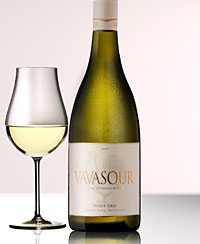
Vavasour Pinot Gris with Zucchini Soup

As we move into the winter months Down Under (yes, mate, Australia is where I am writing this from!), my wife, DAZ in the Kitchen, and I enjoy making more soups for dinner.  We try a variety of soup recipes and have had some spectacular soups from Sibel Hodge's A Gluten Free Soup Opera which provides gluten-free soup recipes which are easy to make, flavorful and healthy.  Sibel's soup recipes are powerful and flavorful with chick peas, lentils and a lot of different spices.

We also like to make creamy vegetable soups such as pumpkin, broccoli, cauliflower and others.  Recently, we were the benefactors of a 2.5 Kg zucchini and had to figure out what to do with it!  We made a lot of zucchini bread muffins (see recipe in last DAZ in the Kitchen post) and a lot of zucchini soup (recipe has not yet, but will be, published soon in DAZ in the Kitchen).  In fact, we had so much zucchini soup, we ended up freezing several servings.  And tonight we are taking two servings out of the freezer for dinner.

I have tried Riesling with creamy vegetable soups and I have also tried Verdelho.  Both work.  However, many Verdelhos are too soft and tepid and many Rieslings are too acidic.  I have found for my taste, I like a Pinot Gris with a creamy vegetable soup (other than tomato).  A young Pinot Gris still has a bit of acid and slight metallic diesel and mild citrus edge to match up well with the vegetables, but also a soft mouth feel to go with the creaminess.  The 2010 Vavasour Pinot Gris is such a wine.

This is a great wine for the money.  We paid $15 per bottle for this.  It is a New Zealand Pinot Gris from the Marlborough region.  It has pear, apple and grapefruit flavors.  The wine is surprisingly well balanced and integrated for such a young wine.  I love the mouth feel and tannins that provide a puckering on the inside of my cheeks.  I would call it off-dry or juicy dry.

This wine is great value for the money and it goes beautifully with creamy vegetables soups.  It has consistently been rate 93/100 or 94/100.  This wine will not cellar for more than a couple of years.  It is drinkable immediately and drinking very well now.  The 2011 is also rated very high and much more available than the 2010.

Some of the Italian Pinot Gris I have tried are a bit more elegant, but also much more expensive.  They go well with a variety of food choices.  But if you are making a simple creamy vegetable soup and possibly having a bread roll to go with it, a New Zealand Pinot Gris like the 2010 Vavasour will do the trick nicely.


Steve Shipley
Twitter: @shipleyaust
My other blog (on business, tech, world issues):  Steve Shouts Out!
My Blake Stevens blog: From Blake's Bookshelf
Still Stupid at Sixty in Amazon Kindle Store


Saturday, 4 May 2013

Storing wine once the bottle has been opened


Opening a bottle of wine changes its taste dramatically over a few hours and accelerates in next day or two exponentially.  This is due to massively more air that the wine comes in contact with after opening as compared to the very little it has experienced while sealed and laid down in the cellar.

During the time in the bottle, only about 5 - 10 ml of air space exists in a 750 ml bottle of wine for the wine to mature by interacting with the air.  With cork, a few more ml seeps through each year (through evaporation of wine) to continue to help the wine mature.  If there is a cork problem, though, and a lot of air is leaking into the bottle, the wine will mature far too quickly and not be drinkable.  For this same reason, once opened and exposed to much more air, the bottle will become undrinkable after a few days.

Unless you are going to drink the entire bottle over several hours, you need to concern yourself with preventing as much air as possible from interacting with the wine to decelerate the ruin of the wine.  There are several ways of doing this: 
  • Stick the original cork back in to stopper the wine bottle (keeps wine good for about 1 – to 1.5 days) 
  • Use a simple consumer manual rubber stopper and vacuum pump set to extract excess air from the bottle (keeps wine good for 2 – 3 days) 
  • Use a commercial pump and storage 2-bottle set (keeps wine good for 4 – 6 days) 
  •  Use a carbon dioxide, nitrogen, and argon gas replacement system  that is completely closed sealed (keeps wine good for up to 2 – 3 weeks)

After decanting wine for the right period of time, it is important to get the wine back into a bottle and stopper it as soon as possible.  While several minutes to several hours (in most cases) of decanting will improve the wine, anything after that will only help the wine deteriorate and turn into vinegar.  To slow this process down to ensure you can finish the bottle of wine prior to it going off, you need to minimize its interaction with air to the least amount of time possible.

Every time you open the bottle again to pour another glass, you are letting new air into the bottle, and as the bottle of wine empties, the amount of new air introduced increases, which quickens the pace of deterioration.  Therefore, it is important to stopper the bottle immediately again once you have finished pouring to minimize any excess air in the bottle.  This is why vacuuming the air out and replacing it with a gaseous blend is the most effective way to keep wine fresh for several weeks.

If the cork is still intact or you still have the screw top after opening the bottle, you can use it to stopper the wine.  While there is no expense to this method, the wine will worsen overnight and not be as drinkable the following day, or at least certainly not drinkable by the second day following opening.  If the bottle has been left half empty overnight, you have introduced a lot of new air into the wine which will quickly deteriorate it.  This approach can be used successfully for keeping a bottle of wine fresh for several hours or maybe from afternoon until evening, but I never would use it to store a half-empty bottle overnight.  I use this approach when I have decanted a fine wine for several hours, then re-bottle it to bring to a restaurant within the next hour or so.

The most cost effective way to store wine and keep it drinkable for one or two more days is to use a vacuum pump and cork set.  These tend to cost around $20 - $25 for a pump and a few stoppers and you can buy more stoppers if required.  This uses a special artificial stopper with small holes and one-way openings.  The pump is used to extract as much air as possible and create a vacuum in the bottle.  This significantly reduces the amount of air in contact with the wine and slows the deterioration process, extending the life of the wine by another day or two.

I have a vacuum pump set and have found this to be great value.  For only $20 - $25, you will save many quarter- to half-bottles of wine for another day and over time this can mean keeping thousands of dollars of wine drinkable.  Since it is just my wife and I usually at home for dinner, we may not drink more than a half bottle or little more during any evening.  We will usually have two or three bottles opened at a time, as our mood changes or as we have a snack or meal.  Using the vacuum pump and stopper method keeps several bottles fresh and available to provide us with good choice.

Additionally, when we have larger dinner parties, we will have eight or ten bottles of wine we want to serve upon arrival, with each food course, and for after dinner.  But you are never sure how many people are going to be drinking (one night a friend who we did not know was pregnant was not drinking, for example), and we may have already decanted several of the finer wines, so we might have three or four partial bottles left over at the end of the night.  By using this vacuum pump, we can then keep and drink the partial bottles over the next few days.

The vacuum pump set is a great option for the money.  However, the technology is more limited than with the next higher up commercial model.  Sometimes the rubber stopper seal will be nudged (possibly even upon removal of the pump) and let air re-enter into the bottle.  (You can tell if this has occurred when you open the bottle and there is no popping of the vacuum.  If there is a definite vacuum breakage popping sound, then you know it was sealed properly.)  If this occurs, you should make sure to drink the rest of the wine right away, or you risk it going bad over another day.  If the seal has remained intact, you may be able to get another day of good drinking from the wine.  Unfortunately, there is really nothing you can do to determine if the seal is intact or not until you open it again.  I just try to be very careful to remove the pump from the stopper after pumping by lifting it straight up.  But the seal also may break sometime during the night based on the opening of the bottle.  Based on bottle type, there may be some small differences in the diameter of the bottle opening, causing the seal to be more fragile for wider bottle openings than for narrower ones.  Additionally, if there is some residual wine liquid on the neck where the stopper has been inserted, then there may be some slippage and the seal could break.

The next day or day after, you will have noticed some changes in the taste of the wine.  It is usually smoother (which can be a pleasant improvement if it was tight when you opened it), but you have usually lost some of the grape fullness of flavor.  Therefore, the wine might taste slightly less robust.  After a couple of days, it may even taste ‘dead’ or totally flat using the vacuum pump method of storage.

The next higher up option for wine storage after opening the bottle comes in a small refrigerated unit that has two compartments to hold two different bottles.  Each bottle has a pumping and extraction capability and for most models, each bottle can be stored at a standard white wine or red wine temperature.  Each compartment is set separately you can either store two whites, or two reds, or one of each at the right temperature.

This more commercial option cost between $500 - $700 based on the features and technology provided, but they all work basically the same.  They also require being placed close to an electric outlet.  This technology provides a better seal and air extraction system than the manual vacuum pump which is why it provides several more days of storage without noticeable change in the quality of the wine.  I have considered buying such a system, but I have not yet, as I have very few bottles that would require five or six days of storage.  Additionally, I have not been entirely comfortable with the value point of the technology.  I expect more competition in this field, with improved quality and durability and a lower price in the near future.  I am open to buying such a system, but have not done so yet.  I keep monitoring this type of device though to see what is available and if it is coming to a value point where I am comfortable purchasing one.

The top of the line unit to store opened bottles costs several thousand dollars and can be configured to store as many bottles as you like.  They typically come in a configuration to store four bottles, but can be customized to store less or more.  Additionally, they can be provided as a counter top unit or designed to be built into the wall or cabinetry.  Wine features such as this type of storage unit plus Vintec or other manufacturer’s cellar units are now being featured as key aspects of kitchen renovations.  I love things that are very functional and very stylish and this type of system fits both characteristics!

These systems are manufactured as closed systems where a tight seal is provided for each bottle.  They typically have temperature control to be able to adjust the temperature to be suitable for a certain type of wine (sparkling versus white versus red).  They have much higher quality parts and are custom assembled to suit your needs.  I am hopeful to get such a unit someday when I have the money and also know that I will be living in that house for a long, long time.  They will allow a wine to be opened and drunk over several weeks. The reason they work so well is that they ensure air cannot creep into the space in the bottle as the air has been replaced with carbon dioxide, nitrogen and argon.  By doing so, oxidation has been reduced drastically, preserving the quality of the wine longer.

There are a number of suitable options to keep your wine as fresh as you need it once you have opened the bottle.  They come at different value points and vary based on how long you would typically need to keep bottles opened before finishing them.  The important thing is to always stopper the bottle with one method or another as soon as you can and to extract as much air as you can from the bottle.  This will slow the rate of deterioration and preserve your wine at a level enjoyable for drinking for a longer period of time.


Steve Shipley
Twitter: @shipleyaust
My other blog (on business, tech, world issues):  Steve Shouts Out!
My Blake Stevens blog: From Blake's Bookshelf
Still Stupid at Sixty in Amazon Kindle Store

Wednesday, 24 April 2013

French versus American Oak - is there a winner?

I have noticed recently a bit of wine competition going on.  Of course, living in Australia and having a place in The Hunter Valley, I have my favorites and will defend them to the death.  But I am a pretty open-minded guy who loves to continue to taste new experiences and continuously learn about new and different things.

Next Friday I am going to a 'Best of USA versus Australia' wine tasting and four-course meal in Melbourne.  What a great night that will be!  Its only $150 per head and the 13 wines and food look magnificent.  If you are interested, I would love to see you there.  Contact Top Australian Wines or just order tickets online.


And this weekend, I will be watching the movie Bottle Shock, which is the 1976 competition between French and Napa Valley wines, which is entitled as it is because of the shock that the Americans came out on top.

But the focus of this blog post is the comparison between wines stored in French Oak and wines stored in American Oak.  The different is mostly two-fold in terms of the effect it has on wine.  French Oak is a tighter grain with the American Oak being courser.  And American Oak has twice to four times the amount of lactones, which provide sweeter and stronger, yet different vanilla overtones.  I had a rare opportunity to compare the exact same wine using the same grapes and from the same vintage stored in both French and American Oak, the wine being the 2008 Rothvale Chardonnay.  Both wines were magnificent!  If I remember correctly, I spent about $22 per bottle for these wines and only bought four of each.  This is the first time I have tried either one as I had been waiting for the right moment to compare both.  My bride, DAZ in the Kitchen, felt the wines would go well with a cheese platter this afternoon and also go well with the mushroom soup we are making this evening.


We sampled and greatly enjoyed both wines.  They are truly spectacular and drink like $50 - $75 bottles of Chardonnay.  Both wines have some similar characteristics:
  • Exact same ingredients and stored in respective oak barrels for 9 months
  • Both have a smooth mouth feel, almost velvety
  • Both are bright yellow, turning golden in color
  • Both are very easy to drink and of extremely high quality
Yet, there are some noticeable differences.  The 2008 Rothvale Chardonnay in French Oak was:
  • More elegant and beautifully balanced
  • Edgier, and slightly more acidic, more lemon citrus flavored
  • Purer, subtler vanilla taste
  • Taste like a typical Montrachet
Whereas the 2008 Rothvale Chardonnay in American Oak was:
  • More in-your-face vanilla flavoring but courser
  • Sweeter, honey-like taste plus smoked almond taste as secondary flavors
  • Richer, more robust flavor overall, but not as integrated or balanced as the French Oak
I would have to give a slight nod to the 2008 Rothvale Chardonnay in French Oak as the better drinking wine today, but I am pretty certain that the 2008 Rothvale Chardonnay in American Oak will drink better in several years time.  I just hope I have a few bottles of each left by then to prove the point!  I am definitely stopping by the winery tomorrow to see if there is any of the 2008 Chardonnays left or if there is an even better vintage since where the Rothvale Chardonnay has been stored in both the French and American Oak.

I have limited experience with great Montrachets, but have certainly been drinking more of them recently and truly enjoy a great Montrachet.  I was under the impression that the characteristics of the individual Montrachets had to do with the locale and soil conditions and I have noticed the differences between a Puligny-Montrachet and a Chassagne-Montrachet.  I thought the difference characters unfolding in the wine were mostly the results of the grapes being in different locations.  But after comparing the Hunter Valley Chardonnay in both French and American Oak, I can understand how impactful the French Oak is in making any Chardonnay (of very good grapes) taste like a Montrachet.

I greatly look forward to drinking both of these wines with the mushroom soup we are making this evening to see if either goes better than the other with the soup.  Hats off to Rothvale on making great wines using both French and American Oak!


Steve Shipley
Twitter: @shipleyaust
My other blog (on business, tech, world issues):  Steve Shouts Out!
My Blake Stevens blog: From Blake's Bookshelf
Still Stupid at Sixty in Amazon Kindle Store

Sunday, 21 April 2013

Wonderful wine gift from in-laws

I suppose now that I have you reading this blog post, I could tell you the wine gift my in-laws provided was their daughter, my lovely bride, DAZ in the Kitchen, who shares in good food and wine with me.  And I do thank them every day for that gift, one which you can not put a price on (even though my father-in-law tried to during his speech at our wedding.  Something about transferring a liability from his balance sheet to mine!).

No, I am referring to a beautiful half bottle of 2002 Inniskillin Vidal VQA Ice wine from Canada.  This is a real gift.  Embarrassingly, I left it sit on the counter for six weeks before even looking at it.  I assumed it was just another dessert wine and I had a few already in the fridge and the Vintec, so I figured in due time I would get around to storing it.  There was no ceremony or exclamation of bringing me such a nice gift.  The in-laws were back from a long time overseas and we had not seen them for a while, so had them and my wife's brother and his wife over for dinner.

The in-laws came in, we shook hands and hugged, took their coats and then my mother-in-law says, "Oh yeah, here's a bottle of ice wine."  I said, "Thanks," and we left it at that and proceeded to talk about things and then sat down to dinner.  No explanation of why they decided to pick that bottle to give me or what a special bottle it is.  (I wonder if they knew?)  Therefore, I thought nothing of it and laid it down on the counter.  I figured it was a current vintage and had a screw top, but fortunately, I laid it down horizontally as a matter of course.  And a good thing I did, as it was neither a current vintage or under screw top:  It was a 2002 vintage under cork.

This morning I decided to finally do something with the bottle and that was the first time I looked at it since they gave it to me.  It was then I noticed it was a 2002 vintage and that surprised me.  I then looked at the alcoholic content (10% which is nice for a dessert wine and a good way to finish off an evening) and was high in residual sugar so I know it is going to be a sweet dessert wine.  I kept looking for the grape used wondering if it was Semillon or Riesling.  Even though the word Vidal was prominently displayed on the bottle and box, I though that was some sort of brand name, not a grape name.  However, Vidal is the name of the grape used.

Some study provided me with background on the Vidal grape.  It is a hybrid grape (Trebbiano and Rayon d'Or) with a very thick skin.  It was originally intended to be used for production of Eastern Canadian brandy.  However, it proved worthy of being used to make great Ice wine.  The grape is now grown in Eastern Canada, upper state New York around Niagara Falls, and in selected locations in the US Midwest region.

Further study showed me that this wine is difficult to source in Australia, and I can only assume my in-laws got it when in London or some other major metropolitan city around the globe.  It is an expensive bottle of wine.  The 1992 vintage is one of the very best.  I greatly look forward to drinking this bottle in the right setting and context.  This wine matches up well with several cheeses and with a pear tart or dessert with caramel sauce - I like the sound of that!  I might bring it along for one of our spectacular lunches at Bistro Molines in the Hunter Valley.  Robert (Molines) does great things with caramel and I could call ahead and ask him to make a special dessert for us.

I am gob-smacked that they gave me such a unique and special bottle of wine.  I have no idea about where they got it and why they decided to give it to me (but will now find out), but I am thankful and greatly anticipating drinking this special bottle.  I can only hope it lives up to my anticipation, but from everything I have read, it should!  Thank you, in-laws!


Steve Shipley
Twitter: @shipleyaust
My other blog (on business, tech, world issues):  Steve Shouts Out!

Sunday, 14 April 2013

2005 Pepper Tree Grand Reserve Tannat - Top Notch? - Think Not!

I bought a six pack of the 2005 Pepper Tree Grand Reserve Tannat several years ago and set it in the cellar.  I just opened my first bottle yesterday.  I was making a chirizo and chickpea soup with lots of flavor including chili, paprika, smoked paprika, mushrooms, black olives, lentils and rocket lettuce.  I just wasn't sure what wine to serve with this soup.  And knowing there would be some left over to go with lasagna this evening and having already matched up some nice Sangiovese and Cabernet Sauvignon wines to go with the lasagna previously, I decided to give this wine a try with both the soup and lasagna.

The 2005 Pepper Tree Grand Reserve Tannat comes from Wrattonbully, a great wine region for Cabernet Sauvignon and some other fine wines.  When my wife first tried this wine at the cellar door several years ago, her reaction was "I can't describe this wine, but I love what it does to my mouth!"  Maybe that was all the description necessary.


When opening the bottle yesterday, and trying my first sip, I noticed the wine to be quite lively, almost fizzy, like a weak sparkling wine on my palate.  It also had large tannins and was a bit gritty.  I was expecting this wine to provide a 'punch in the mouth' in terms of flavors, but it did not.  The fruit was lively enough and it tasted of berries, but more like raspberries and a bit weak overall.  I searched hard for secondary flavors and only found the smallest trace of chocolate.

It has an interesting mouth feel, being high in tannins and with the fizzy feeling going on.  This settled down the second day the bottle was open and while it was still gritty, it was smoother and less active on my palate.  However, this wine is a disappointment overall.  It just lacks any type of finesse or complexity.  The berry taste is flat and the secondary characteristics (except for that trace of chocolate) missing.  To self-categorize this wine as a 'Grand Reserve' seems almost deceptive.  And coming from Wrattonbully, I was expecting better.

I have had a recent love affair with secondary red grapes, including my affection for Grenache, Tempranillo, and Malbec, but this wine does nothing to put a Tannat in that group.  This is the only Tannat I have ever drank, so I am not sure if the limitations are in the grape itself or the wine making process for this particular brand and vintage.  I need to try a few more Tannats to find out.

Looking back, I thought this might be an interesting and different wine to occasionally serve up, but I was wrong.  Fortunately, I have a leftover glass of the 2007 McWilliams Mount Pleasant Maurice O'Shea Shiraz to go with my lasagna tonight and I just got the call for dinner, so will enjoy that instead of the Pepper Tree Tannat.  It is not a perfect match, but will have to do.


Steve Shipley
Twitter: @shipleyaust
My other blog (on business, tech, world issues):  Steve Shouts Out!
My Blake Stevens blog: From Blake's Bookshelf
Still Stupid at Sixty in Amazon Kindle Store

Thursday, 11 April 2013

My new book "Wine Sense(s)"

I have been blogging less recently as my writing efforts have been focused on my full-time job and a book on wine.  I am very excited and have the book well structured, have written about 20,000 words and expect the book to be 75,000 - 100,000 words in length.  This has had an impact though by reducing the time and energy for blogging.

I originally was writing a blog post on how to appreciate wine and how wine interacts with the human senses, but it quickly grew to several thousand words without being close to complete.  I thought about segmenting it into a series of blog posts, but even that would have been a lengthy serial.  Therefore, I decided to turn it into a book which I am thinking of calling Wine Sense(s).  The book is well structured and I am about a quarter complete with the first draft.  I am taking a four day long weekend over ANZAC Day week after next, and taking two weeks off from my day job in July to focus on competing the first draft.  I am getting about 3,000 - 4,000 words written per weekend, and when focused, I can write 5,000 words per day.  Therefore, I am pretty comfortable to have a first draft complete by end of July.

But then the real work begins providing sources, footnotes, links to other resources, and finding 50 - 75 pictures to include.  Then re-writing, editing, and formatting for electronic publishing.  This may take an additional 4 - 6 months.

I think Wine Sense(s) will serve a real purpose and be of interest to a large audience.  I have read a number of books on wine appreciation, wine tasting, and the philosophy of wine, and I believe my book will fit into a nice middle ground and be of use for the novice and experienced wine drinker alike.  It will offer pragmatic advice as to why and how to to learn to enjoy and appreciate wine drinking, and to provide you with confidence and the ability to drink far better wines on a reasonable budget.

I wrote my first book Still Stupid at Sixty a year ago under the pseudonym Blake Stevens.  I have received good feedback on Still Stupid at Sixty plus learned a lot about book writing and publishing.  That effort was 75,000 words and a book I had to write.  It was only published independently and electronically and can be found on Amazon.  My book Wine Sense(s) will be published in both physical and electronic format and I am considering using a traditional publishing house.  I love writing and am passionate about wine, so it is a good combination.

I have turned my life around financially in the last few years as presented in Still Stupid at Sixty, and am now far better off and moving on.  I present it as a gift (and at $3.99, the book truly is a gift!) for others to learn from my mistakes and what to do to avoid making them.

Therefore, I will be publishing a few less blog posts over the next few months, but also taking some excerpts from my new book as preludes and hopefully to get some good feedback on the concepts before final publishing.

I love drinking wine and writing about wine and looking forward to sharing that with you even more in the near future.  Please follow and enjoy the journey with me.


Steve Shipley
Twitter: @shipleyaust
My other blog (on business, tech, world issues):  Steve Shouts Out!
My Blake Stevens blog: From Blake's Bookshelf
Still Stupid at Sixty in Amazon Kindle Store